
What Is Revenue Leakage in MVNO Billing?
Revenue leakage in the context of MVNO billing refers to the loss of legitimate revenue due to inaccuracies, inefficiencies, or errors during the entire billing process. Unlike fraud, which involves intentional theft or deception, revenue leakage happens inadvertently—through system gaps, configuration mistakes, or operational oversights.
Preventing revenue leakage is essential for MVNO profitability and business sustainability. Since MVNOs operate on often thin margins and depend on wholesale agreements with MNOs or MVNEs, any leakage directly impacts the bottom line and can erode customer trust if billing errors affect subscribers.
Overview of the MVNO Billing Lifecycle
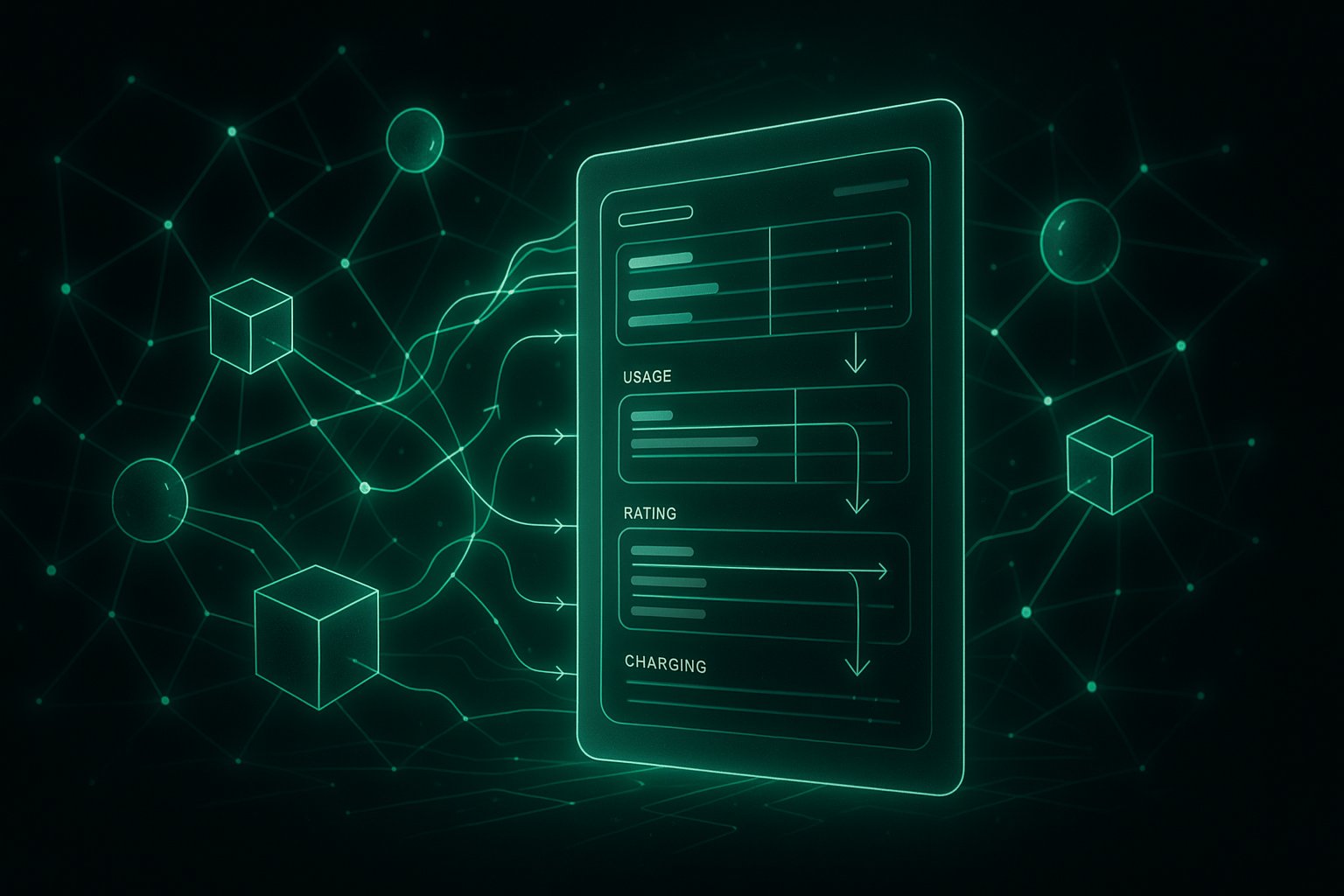
The MVNO billing lifecycle encompasses multiple stages, each a potential leakage point:
- Usage Capture: Collecting raw data on subscriber activity from network elements.
- Mediation: Processing and formatting usage data for rating.
- Rating: Applying tariffs and discounts to calculate charges.
- Charging: Real-time or batch charging of accounts.
- Billing: Generating bills based on rated usage.
- Invoicing: Creating and sending invoices to customers or partners.
- Payments and Adjustments: Processing payments, credits, and corrections.
- Wholesale Charges and Partner Reconciliation: Settling accounts with MNOs, MVNEs, and other partners.
- Revenue Assurance: End-to-end validation and monitoring of revenue flows.
Leakage can occur at every stage, often compounding downstream.
Where Does Revenue Leakage Occur in an MVNO?
Mapping Leakage Points Across the Billing Lifecycle
Below is a mobile-optimized flowchart representation of key leakage points along the MVNO billing lifecycle:
| Usage Capture | Data loss or missing usage events | Lost revenue from unbilled usage |
| Mediation | Duplicate or incomplete records | Billing errors, disputes |
| Rating | Tariff misconfiguration, failed charging | Undercharging or customer dissatisfaction |
| Billing & Invoicing | Invoice mismatches, missing discounts | Revenue loss and customer complaints |
| Payments & Adjustments | Incorrect credits or delayed adjustments | Unnecessary revenue write-offs |
| Wholesale & Partner Reconciliation | Partner invoice discrepancies | Overpayments or missed chargebacks |
Summary Table: Leakage Areas, Examples, & Impact
| Billing Stage | Leakage Scenario | Potential Impact | Example |
|---|---|---|---|
| Usage Capture | Missing usage events | Lost revenue from unbilled calls or data | Roaming usage not captured due to mediation filters |
| Rating | Tariff misconfiguration | Undercharging or incorrect discounts | Discounts applied incorrectly after rate plan change |
| Billing & Invoicing | Duplicate billing records | Customer disputes and write-offs | Invoice generated twice due to batch processing error |
| Wholesale Billing | Partner invoice mismatches | Overpayments or revenue loss | MVNE charges not reconciled with actual usage |
Common Causes of MVNO Billing Leakage
Usage Capture and Mediation Leakage
Causes: Missing or delayed usage records, mediation software bugs, incomplete integration with partner networks or MVNEs.
Operational Signals: Sudden drops in usage volumes, discrepancies between network data and mediation records.
Controls: Real-time usage monitoring dashboards, mediation reconciliation tools that compare raw network data to processed records.
Rating and Charging Errors
Causes: Tariff configuration mistakes such as incorrect discount application, failed or incomplete charging events, rating engine bugs, outdated rate plans.
Operational Signals: Unusual rating exceptions or errors, spikes in failed charging events.
Controls: Automated tariff validation and change management, rating simulation/testing tools before deployment.
Billing and Invoicing Leakage
Causes: Duplicate or missing billing records, inaccurate invoice generation, incorrect discount application, delays leading to disputes.
Operational Signals: Mismatches between rated usage and billed amounts, flagged invoice audits, customer complaints.
Controls: Billing reconciliation workflows, automated invoice validation, dispute management systems.
Wholesale and Partner Billing Leakage
Causes: Discrepancies in partner invoices, reconciliation gaps, delayed invoice matching.
Operational Signals: Variances in partner statements, unresolved reconciliation items.
Controls: Partner billing automation platforms, scheduled reconciliation cycles, exception reporting.
Adjustments and Revenue Assurance Leakage
Causes: Manual billing adjustments errors, incomplete audit trails, lack of end-to-end revenue assurance.
Operational Signals: Frequent billing adjustments, spikes in credit memo issuance.
Controls: Automated adjustment workflows with audit trails, revenue assurance dashboards monitoring KPIs.
Usage Capture and Mediation Leakage
What Causes Usage Capture Leakage?
Usage capture leakage often originates from network integration gaps, data loss during transmission, or mediation software bugs that filter out valid records.
Operational Signals Indicating Leakage
- Unexpected drops in daily usage volumes
- Discrepancies between raw network data and mediation outputs
- Mediation system alerts on missing or delayed records
Control Systems and Best Practices
- Implement real-time usage validation tools to detect missing events quickly
- Use mediation reconciliation reports comparing network and processed data sets
- Automate alerts for anomalies in usage volumes or data flow
Real-World Example
An MVNO experienced significant revenue loss after roaming usage was excluded due to a mediation filter misconfiguration. The issue was detected through a sudden drop in roaming data records, prompting an immediate mediation rule review and correction.
Strong OSS operations support systems can improve network-side visibility and help identify missing usage data.
Rating and Charging Errors
Common Rating and Charging Leakages
Errors here include incorrect tariff application, failed charging sessions, and invalid discount assignments, often caused by misconfigured rating engines or outdated rate plans.
Operational Signals
- Frequent rating exceptions or error logs
- Higher-than-normal failed charging event counts
- Invoice discrepancies between expected and actual charges
Control Mechanisms
- Tariff configuration management tools with validation rules
- Rating simulators that test new tariffs before production rollout
- Automated retry mechanisms for failed charging events
Practical Example
Following a rate plan update, an MVNO undercharged subscribers because the discount was incorrectly applied to all plans instead of select segments. Automated tariff validation could have prevented this leak.
Billing and Invoicing Leakage
Key Causes
Billing leakage is often due to duplicate or missing billing records, manual errors during invoice generation, or failure to apply discounts correctly.
Operational Signals
- Audit mismatches between billed and rated usage
- Customer complaints about incorrect charges
- Delays in invoice generation triggering disputes
Controls and Technology Solutions
- Automated billing validation workflows checking data consistency
- Dispute resolution workflows to handle exceptions promptly
- Regular invoice audits and exception reporting
Illustrative Example
An MVNO’s invoices omitted roaming charges because of data synchronization failures between the billing system and mediation platform. Implementing automated invoice validation flagged this prior to customer delivery.
Wholesale and Partner Billing Leakage
Leakage Scenarios
Discrepancies in partner invoices, delayed reconciliations, and missed chargebacks commonly cause wholesale billing leakage.
Operational Signals
- Partner reconciliation reports showing variances
- Exception queues with unresolved partner billing issues
- Frequency of chargeback disputes
Control Frameworks
- Integrated partner billing platforms for streamlined invoice processing
- Automated reconciliation tools reducing manual errors
- Service Level Agreement (SLA) monitoring for partner compliance
Real-World Example
An MVNO discovered overcharges from its MNO partner due to reconciliation gaps. Implementing monthly reconciliation cycles and exception reporting resolved discrepancies and prevented future leakage.
Understanding MVNO and MVNE partnerships helps clarify the operational relationships behind wholesale billing flows.
How to Detect Revenue Leakage in MVNO Billing
Key Operational Signals and KPIs
- Usage volume monitoring against network benchmarks
- Failed transaction and charging failure rates
- Invoice variance tracking compared to rated usage
- Partner reconciliation exception counts
Tools and Techniques for Leakage Detection
- Revenue assurance software with anomaly detection capabilities
- Mediation audit reports comparing raw and processed usage
- Exception management systems prioritizing high-risk leakage areas
Implementing a Revenue Leakage Detection Framework
- Data Collection: Aggregate data from network, mediation, billing, and partner systems.
- Anomaly Detection: Use automated tools to flag deviations from expected patterns.
- Investigation: Cross-functional teams analyze flagged issues.
- Resolution: Implement corrective actions, update processes and systems.
Example Decision Matrix Table
| Detection Tool | Data Source | Signal Type | Action Step |
|---|---|---|---|
| Revenue Assurance Platform | Usage, Billing, Payments | Anomalies & Exceptions | Automated alerts and case management |
| Mediation Audit Reports | Raw vs Processed Usage | Missing/Duplicate Records | Reconciliation and correction |
| Partner Reconciliation Tools | Partner Invoices & Statements | Discrepancies | Exception resolution and chargebacks |
How to Prevent and Reduce MVNO Revenue Leakage
Best Practices Across the Billing Lifecycle
- Implement continuous data validation at every stage
- Maintain end-to-end reconciliation processes
- Leverage automation to reduce manual errors
Technology and Process Controls
- Real-time mediation and usage validation
- Robust tariff management with automated change controls
- Automated billing and invoicing workflows
- Structured partner reconciliation with SLA tracking
Organizational Measures
- Cross-functional collaboration between technical, billing, and finance teams
- Regular training on billing systems and processes
- Scheduled audits and leakage reviews
- Clear accountability and SLA enforcement
Common Mistakes to Avoid
- Overreliance on manual reconciliation and adjustments
- Ignoring small discrepancies that compound over time
- Delayed resolution of detected leakage issues
- Insufficient integration between billing and partner systems
Actionable Recommendations for MVNOs
- Audit current billing lifecycle for leakage hotspots
- Implement real-time monitoring and exception management
- Invest in or upgrade to billing platforms with strong revenue assurance capabilities
- Establish clear workflows for partner reconciliation
What to Look for in an MVNO Billing Platform
Critical Features for Revenue Leakage Prevention
- Accurate usage mediation and real-time validation
- Flexible, error-resistant rating engines with tariff simulation
- Automated billing and invoice validation workflows
- Partner billing and reconciliation modules with exception reporting
- Comprehensive revenue assurance dashboards and audit trails
Evaluation Criteria for MVNO Decision-Makers
- Ease of integration with network elements, MVNEs, and partners
- Support for real-time processing and alerting on anomalies
- Customizable tariff and discount management features
- Robust audit and compliance reporting capabilities
- Scalability and support for MVNO-specific billing scenarios
Mobile-Optimized Comparison Table
| Feature | Leakage Control | Operational Benefit |
|---|---|---|
| Real-time Mediation & Validation | Detect missing usage early | Faster issue resolution, reduced revenue loss |
| Flexible Rating Engine | Prevent tariff and discount errors | Accurate charging, customer satisfaction |
| Automated Billing & Invoice Validation | Eliminate duplicates and incomplete bills | Reduced disputes, faster cash flow |
| Partner Billing & Reconciliation Module | Resolve wholesale discrepancies | Minimized overpayments and chargebacks |
| Revenue Assurance Dashboards | Monitor KPIs and leakage signals | Proactive leakage management |
Practical Considerations
- Evaluate vendor support responsiveness and expertise in MVNO domains
- Consider upgrade paths and integration complexity
- Balance flexibility with platform complexity to avoid operational bottlenecks
Conclusion: Confidently Addressing Revenue Leakage in MVNO Billing
Revenue leakage in MVNO billing remains a critical challenge in 2026, with increased complexity in monetization systems making traditional downstream corrections insufficient. Modern revenue leaders understand leakage as a systemic issue involving contract logic, usage capture, billing execution, and revenue recognition operating out of sync.
By understanding leakage points from usage capture through partner reconciliation, MVNOs can implement targeted controls and leverage advanced billing platforms to close gaps. A lifecycle-wide, data-driven approach incorporating real-time monitoring, automated validations, and cross-functional workflows is essential to secure and grow revenues.
MVNOs evaluating existing operations or new billing technologies should rigorously assess their leakage risks and mitigation capabilities, adopting comprehensive revenue assurance frameworks that enforce revenue integrity across complex systems to maintain financial health and competitive advantage.
The right MVNO technology stack should support integration, automation, monitoring, and reliable billing operations.
Frequently Asked Questions (FAQ)
What is revenue leakage in MVNO billing?
Revenue leakage in MVNO billing is the inadvertent loss of legitimate revenue due to errors, inefficiencies, or inaccuracies across the billing lifecycle, impacting profitability and customer trust.
Which stages in the MVNO billing lifecycle are prone to revenue leakage?
Leakage can occur at usage capture, mediation, rating, charging, billing, invoicing, payments, wholesale charges, partner reconciliation, and revenue assurance stages.
What are common causes of MVNO billing leakage?
Common causes include missing or duplicate usage records, tariff misconfigurations, billing mismatches, mediation errors, delayed adjustments, and wholesale reconciliation gaps.
How can MVNOs detect revenue leakage early?
By monitoring operational signals like usage anomalies, rating exceptions, invoice variances, and partner statement discrepancies using revenue assurance tools and anomaly detection systems.
What controls help prevent usage capture and mediation leakage?
Real-time usage validation, mediation reconciliation reports, and automated alerts for data anomalies are key controls to prevent leakage at usage capture and mediation stages.
How do rating and charging errors cause revenue leakage?
Errors such as incorrect tariff application, failed charging events, or outdated rate plans lead to undercharging or incorrect discounts, causing revenue loss.
What features should an MVNO billing platform have to prevent leakage?
Critical features include real-time mediation and validation, flexible rating engines, automated billing and invoice validation, partner reconciliation modules, and revenue assurance dashboards.
Why is partner billing reconciliation important for MVNOs?
Partner reconciliation ensures accurate settlement with MNOs and MVNEs, preventing overpayments, missed chargebacks, and revenue loss from invoice discrepancies.
What organizational measures reduce MVNO revenue leakage?
Cross-functional collaboration, regular training, scheduled audits, clear accountability, and SLA enforcement help maintain billing accuracy and minimize leakage.
What mistakes should MVNOs avoid to reduce revenue leakage?
Avoid overreliance on manual reconciliations, ignoring small discrepancies, delayed resolution of issues, and poor integration between billing and partner systems.
How does automation help in reducing MVNO billing leakage?
Automation reduces manual errors by enabling real-time data validation, tariff management, billing workflows, and partner reconciliation, allowing faster detection and resolution of leakage.
What is the role of revenue assurance in MVNO billing?
Revenue assurance provides end-to-end monitoring, validation, and anomaly detection across billing processes to ensure revenue integrity and prevent leakage.